

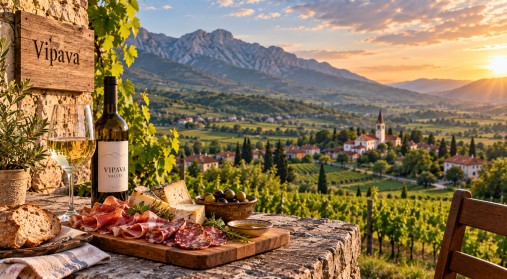
Nestled in southwestern Slovenia, the Vipava Valley offers a tranquil alternative to the country’s more frequented tourist spots, such as the Soča Valley. Located about an hour southwest of Ljubljana and near the Italian border, this region is characterized by its scenic rural landscapes, historic villages, and burgeoning small-scale tourism. The Vipava River, running through the heart of the valley, nurtures a fertile terrain surrounded by karst hills and mountain slopes, creating an ideal setting for agriculture and wine production.
A defining feature of the Vipava Valley is the burja, a strong, dry wind descending from the Alps that has shaped the local agricultural practices. This wind has been instrumental in establishing favorable conditions for vineyards, which are a cornerstone of the region’s attractions. The hillsides are blanketed with vineyards, and small wineries throughout the valley offer a variety of regional wines. Wine tourism here is intricately linked with local agriculture, ensuring that the vineyards, villages, and countryside remain at the forefront of the visitor experience.
Culinary traditions are equally prominent in the Vipava Valley. Visitors can enjoy local specialties such as sheep and goat cheeses, cured meats, handmade pasta, and traditional Slovenian dishes, all sourced from seasonal produce. The valley’s farm-based restaurants and rural eateries provide an authentic taste of the region’s culinary heritage. Many historic farm buildings are being restored as guesthouses and holiday accommodations, preserving traditional architecture while promoting rural tourism.
The valley also caters to outdoor enthusiasts with cycling routes weaving through vineyards and serene countryside, and hiking trails that venture into the surrounding hills. Paragliding has gained popularity thanks to the area’s mountainous terrain. Additionally, the region is steeped in history, with Ajdovščina showcasing remnants of its Roman past and Vipavski Križ offering a quaint historic setting with picturesque streets.
Vipava Valley’s tourism strategy focuses on small businesses and local traditions, eschewing large-scale resorts. This approach allows travelers to experience a more rural side of Slovenia, maintaining the character of the villages, vineyards, and agricultural landscapes. For those seeking breathtaking scenery, regional cuisine, wine, and outdoor activities away from Slovenia’s more crowded destinations, the Vipava Valley presents an enticing alternative.