

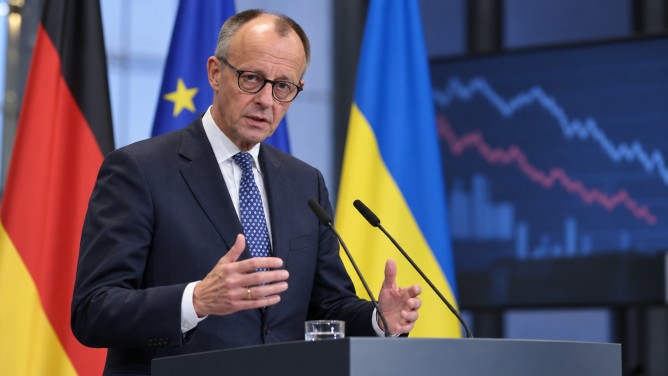
German Chancellor Friedrich Merz has urged the European Union to bolster its financial support for Ukraine, citing a looming budget shortfall in 2027 as Kyiv grapples with escalating economic challenges exacerbated by Russian aggression. Speaking during a summit of EU leaders in Brussels, Merz emphasized the importance of continued and robust assistance to help Ukraine navigate the upcoming winter and sustain its defense efforts.
Currently, the EU has committed a €90 billion loan package aimed at addressing Ukraine’s financial needs through the end of 2027. However, Ukrainian officials have indicated that this amount may fall short, projecting a requirement for additional tens of billions of euros to stabilize the country’s economy and fend off increased military pressure from Russia.
In an effort to precisely gauge Ukraine’s financial requirements for the upcoming year, the European Commission is collaborating closely with Kyiv. Meanwhile, the impact of persistent Russian strikes has further strained Ukraine’s economy, heightening concerns about its fiscal stability and future resilience.
Additionally, EU leaders are exploring the possibility of utilizing approximately €200 billion in frozen Russian central bank assets to support Ukraine. The proposal, however, faces notable resistance, particularly from Belgium, where the majority of these assets are held. Merz has dismissed the notion of transferring a portion of these assets to the United States as part of potential peace talks with Russia, asserting that such decisions should remain under European jurisdiction.
As Ukraine confronts mounting military and economic hurdles, Ukrainian President Volodymyr Zelensky is slated to meet with European leaders to advocate for further financial assistance. The discussions are expected to focus on securing the necessary funds to sustain Ukraine’s economy and bolster its defenses against ongoing Russian attacks.