

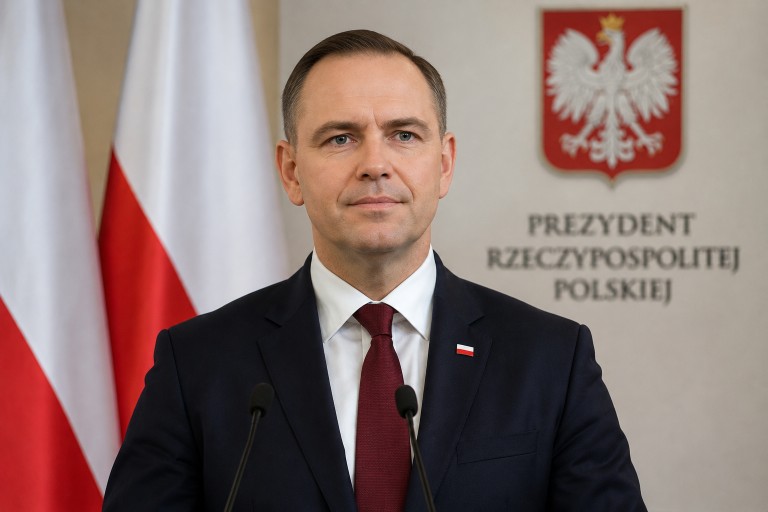
In a solemn ceremony marking the 82nd anniversary of the Warsaw Uprising, Polish President Karol Nawrocki honored the memory of over 50,000 civilians who perished in the Wola Massacre during World War II. This tragic event, which unfolded in the Wola district of Warsaw, stands as a stark reminder of the brutality faced by innocent women, children, and the elderly during the conflict. President Nawrocki’s remarks at the memorial underscored the dual nature of the uprising, highlighting both the spirit of resistance and the profound suffering endured by civilians.
President Nawrocki took the opportunity to express his dissatisfaction with the lack of justice served to those responsible for the massacre. Despite the passage of time, many of the perpetrators have evaded accountability, a fact that remains a point of contention for those who seek justice for the victims. Nawrocki’s speech underscored a broader call to action, urging the international community to prioritize holding dictators and war criminals to account. He argued that without addressing these historical injustices, achieving true peace and justice remains an elusive goal.
The commemoration in Warsaw’s Wola district is part of an ongoing effort to remember the Warsaw Uprising, a pivotal moment in Polish history when citizens took up arms against occupying forces. While the uprising is celebrated for its courageous stand against oppression, it also casts a long shadow due to the horrific events that unfolded in Wola. The massacre, executed with chilling precision, decimated the civilian population, leaving a deep wound in the collective memory of Poland.
Nawrocki’s appeal for justice highlights the importance of historical accountability as a foundation for peace. By addressing past atrocities, he suggested, nations can lay the groundwork for a future where such horrors are less likely to occur. His remarks serve as a poignant reminder of the enduring impact of the Wola Massacre and the ongoing struggle to ensure that the sacrifices of those who suffered are not forgotten.
As Poland continues to commemorate its history, President Nawrocki’s message resonates beyond its borders, inviting reflection on the responsibilities of the international community in confronting and rectifying historical wrongs. The memory of the Wola Massacre, as part of the larger narrative of the Warsaw Uprising, remains a powerful testament to the resilience of the human spirit and the enduring quest for justice.