

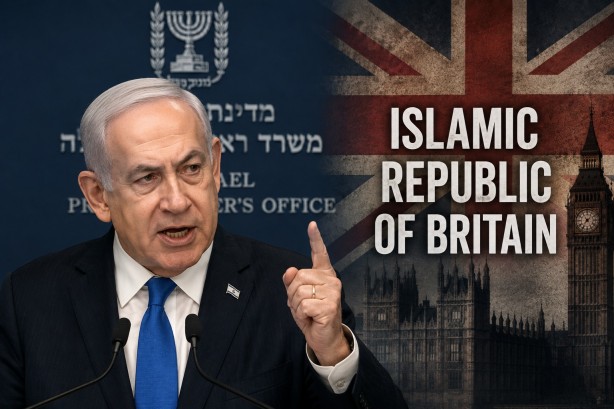
In a recent podcast interview with Israel’s army radio, Israeli Prime Minister Benjamin Netanyahu stirred controversy by referring to the United Kingdom as the “Islamic republic of Britain” and suggesting it could become the “first Islamic republic to get a nuclear weapon.” This statement has attracted criticism from British officials and Netanyahu’s political adversaries in Israel, as it was perceived to perpetuate Islamophobic stereotypes regarding Britain’s Muslim community. The remarks have exacerbated already strained relations between the UK and Israel, primarily due to disputes over Israeli military actions in Gaza and the UK’s criticism of Israeli policies.
Netanyahu’s comments emerged during a discussion about Britain’s evolving political landscape. While he expressed appreciation for Randolph Churchill, the son of former British Prime Minister Winston Churchill, for his favorable coverage of Israel, the prime minister’s subsequent remarks have overshadowed his praise. British authorities, including Prime Minister Andy Burnham, have voiced disapproval over the statements, with Burnham indicating potential measures such as increased pressure on Israel, sanctions, and trade restrictions involving illegal settlements.
The British Foreign, Commonwealth and Development Office condemned Netanyahu’s comments as “completely unacceptable” and confirmed that the matter has been addressed with the Israeli government. This diplomatic friction occurs against the backdrop of escalating tensions between Israel and its Western allies over the ongoing conflict in Gaza. Additionally, debates around Islamophobia and anti-Muslim rhetoric continue to intensify within the UK.
Criticism of Netanyahu’s remarks has also surfaced from within Israel. Avi Dabush, an opposition politician, accused the prime minister of jeopardizing Israel’s relationship with a key international ally. Dabush’s critique highlights concerns about Israel’s growing diplomatic isolation. Meanwhile, the controversy underscores the broader geopolitical challenges facing both nations as they navigate complex international relationships and domestic issues related to religion and security.