

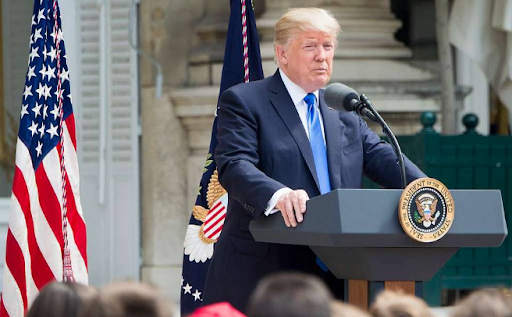
President Donald Trump has maintained strict secrecy around potential US military operations against Iran while confirming substantial naval deployments are underway. In a Saturday briefing with reporters, Trump declined to provide specifics about his decision-making process regarding Iran, saying only that he “can’t tell you that” when pressed on whether military action had been finalized. The president did acknowledge, however, that Washington has dispatched “really big powerful ships heading in that direction,” signaling serious military preparations.
The heightened tensions center on Iran’s advancing nuclear programme, which Western powers suspect is designed to produce nuclear weapons despite Tehran’s denials. Trump struck a dual tone in his remarks, keeping military options open while expressing hope for a diplomatic resolution. “I hope to negotiate something that’s acceptable,” the president said, suggesting that talks remain a viable path forward despite the military buildup in the region.
Trump’s current focus on nuclear diplomacy represents a strategic shift from his previous stance on Iran. Just weeks ago, the president threatened military retaliation if Iranian authorities killed protesters during widespread anti-government demonstrations. Those protests, which erupted in late December and reached their peak in early January, were met with a brutal crackdown that Iranian officials say resulted in over 3,000 deaths. However, authorities in Tehran claim the majority of casualties were their own security personnel or innocent bystanders killed by what they describe as rioters.
Responding to comments from Saudi Arabia’s Defence Minister about the consequences of US inaction, Trump acknowledged the complexity of the situation. The Saudi official reportedly warned that backing down from military strikes would only embolden Iran, but Trump noted that opinions on this strategy vary widely. “Some people think that and some people don’t,” he observed, while making clear his preference for achieving a nuclear-free deal through negotiation rather than force.
Iran has countered American saber-rattling with its own propaganda campaign, erecting billboards and banners throughout Tehran to rally public support. One particularly provocative poster shows an American aircraft carrier being destroyed, a clear message of defiance to Washington. Despite the hostile imagery, Trump suggested that diplomatic channels remain active, noting that Iranian officials are “seriously talking to us” about potential agreements. Whether these discussions can produce a breakthrough that averts military conflict remains uncertain, with Trump himself expressing doubt about Iran’s willingness to fully abandon its nuclear aspirations.