

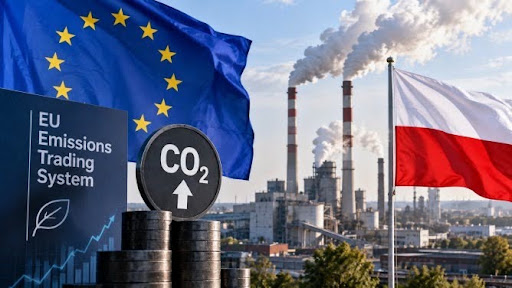
Polish businesses are grappling with escalating expenses tied to the European Union’s Emissions Trading System (ETS), sparking concerns over the nation’s industrial competitiveness. According to energy-sector representatives, the costs associated with ETS can constitute as much as 50% of the electricity bills for certain Polish industrial consumers. This figure is starkly higher than the EU average, which hovers around 11%.
Poland is undergoing a challenging energy transition, shifting away from one of Europe’s largest coal-dependent power infrastructures. In light of this, Polish officials are advocating for modifications to the ETS that would lessen its financial burden, thereby enabling the country to continue its emissions reduction efforts. Despite these challenges, Poland is making significant strides in renewable energy adoption, energy storage solutions, offshore wind projects, and nuclear power. Notably, renewable energy sources made up 41.6% of Poland’s electricity mix in July, marking a historic moment when renewable generation outpaced coal-fired generation for the first time.
In addition to its renewable energy efforts, Poland has been working to reduce its reliance on Russian gas. This has been achieved through diversification strategies such as increased LNG imports and the utilization of the Baltic Pipe. These initiatives underscore the country’s commitment to enhancing its energy security and independence.
Polish authorities are adamant that the country does not plan to stall its energy transition. However, they are seeking more flexibility and adequate time to safeguard the industrial sector and sustain economic competitiveness. Officials emphasize the need for continued investment in new power-generation capacities, as well as improvements to electricity grids, storage solutions, and system adaptability to support this transition.