

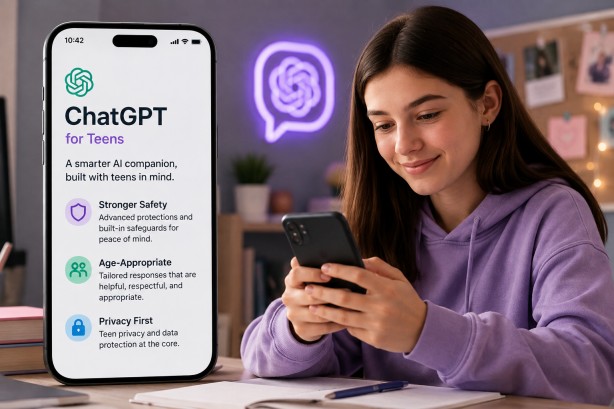
OpenAI has unveiled a new version of its ChatGPT, tailored specifically for teenagers aged 13 to 17, featuring enhanced safety protocols and age-suitable protections. This teen-focused version is designed to offer a safer digital space by restricting content related to self-harm, suicide, and conversations of a sexual or romantic nature. It aims to provide an environment where younger users can engage with AI for educational purposes, everyday inquiries, and companionship.
To further support healthy interactions with AI, the new version incorporates features that allow parents to manage their teenagers’ access. Parents who link their accounts to their children’s can set ‘quiet hours,’ during which the teenagers are unable to use ChatGPT. Additionally, in potentially high-risk situations, parents might receive safety alerts.
OpenAI is committed to reinforcing safeguards around sensitive subjects, such as eating disorders, and aims to limit exposure to potentially harmful information. The platform is designed to guide users toward offline support networks when necessary. Moreover, OpenAI is actively working to prevent teenagers from developing unhealthy emotional attachments to the chatbot by ensuring the teen version does not imply that the AI possesses personal feelings, consciousness, or emotions.
To identify users under 18, OpenAI employs age-assurance technology that estimates age based on user interaction patterns with the service. This technology helps ensure that minors are automatically placed into the teen version, benefiting from additional protections. For educational purposes, ChatGPT for Teens encourages students to engage in problem-solving and understanding rather than simply providing them with answers or completing their assignments. This approach positions AI as a supportive learning tool rather than a substitute for genuine learning experiences.