

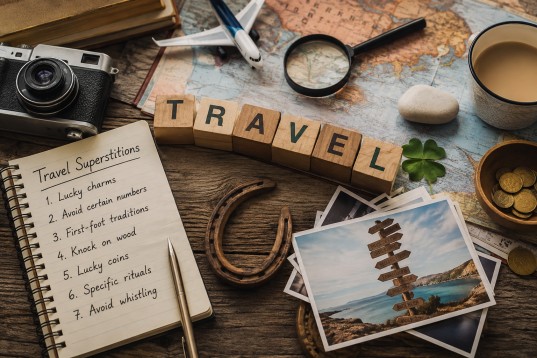
As travelers embark on their journeys, many continue to uphold various traditions and superstitions believed to ensure good fortune and safety. These practices, deeply rooted in cultural folklore, are observed globally, adding a layer of reassurance and comfort to the travel experience. Whether it’s a clove of garlic tucked in a suitcase or a specific boarding ritual, these actions reflect the universal desire for a smooth journey.
In the Balkans, carrying a clove of garlic is thought to ward off bad luck and negative energy, a practice some travelers adhere to by placing the garlic in their luggage. Similarly, a common ritual among air travelers involves touching the exterior of the airplane before boarding. This act is seen as a gesture of trust and gratitude, symbolizing a wish for a safe flight while also helping to alleviate anxiety for some passengers. Another boarding custom practiced in various cultures is stepping onto the plane with the right foot first, as it is believed to bring good fortune and set a positive tone for the trip.
Family rituals also play a role in travel traditions. In parts of Eastern Europe and the Middle East, it is customary to pour or sprinkle water behind a departing traveler. This act is thought to ensure a smooth and successful journey, with the water symbolizing a safe return home. Conversely, certain numbers are avoided due to cultural superstitions. For example, the number 13 is often considered unlucky in Western countries, the number 4 is avoided in East Asia due to its association with death, and 17 carries similar connotations in Italy. Consequently, these numbers are frequently omitted from hotel rooms, buildings, and airline seat assignments.
In several Slavic countries, there is a tradition of sitting quietly on packed luggage before setting off. This pause allows travelers a moment to relax, remember any forgotten items, and mentally prepare for the journey ahead. Additionally, in various cultures, sweeping the floor immediately after someone leaves is believed to bring bad luck or disrupt their safe return, leading families to delay cleaning until the traveler has reached their destination safely.
While these customs may not be grounded in scientific evidence, they remain a fascinating aspect of travel culture worldwide. Whether regarded as symbols of good luck or comforting rituals, they highlight the lengths to which people across the globe are willing to go to ensure peace of mind and a successful journey.