

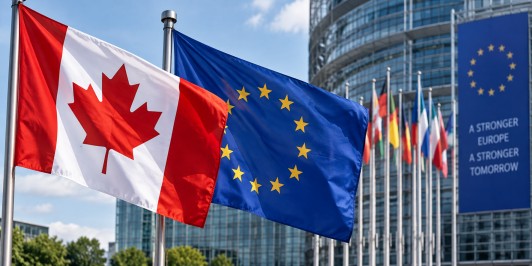
Amid rising trade tensions with the United States, Canada is actively pursuing stronger economic and strategic links with the European Union. Prime Minister Mark Carney has engaged in talks with leaders from France, Germany, and Italy, focusing on improving Canada’s connection to the EU without full membership. Canadian officials are considering an associate membership with the EU, aiming for better access to the EU’s single market.
The potential collaboration would target key strategic areas, including energy, artificial intelligence, critical minerals, defense, technology, and infrastructure. Canada is also looking into enhancing relations in research, higher education, data centers, telecommunications, and satellite networks. A significant component of this initiative is expanding energy ties with Europe, which involves developing infrastructure that could facilitate the export of Canadian natural gas to European markets, reducing Europe’s reliance on Russian energy.
This strategic shift underscores Canada’s broader objective of diversifying its economy to lessen its dependency on the United States, which currently absorbs about two-thirds of Canadian exports. By seeking new partnerships, Canada aims to fortify its economic base and mitigate potential risks associated with its heavy reliance on the U.S. market.
European nations have shown a cautious interest in Canada’s proposals. While closer cooperation between Canada and the EU could unlock new economic opportunities, it might also strain relations with Washington, especially given the current geopolitical climate. As discussions continue, both Canada and the EU are weighing the potential benefits and challenges of deepening their economic ties.