

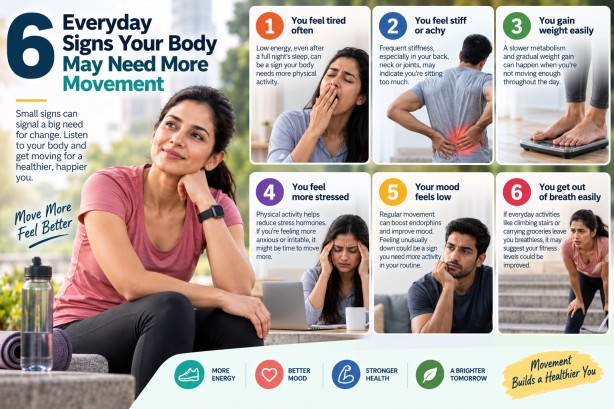
Without experiencing pain, your body can still signal the need for more movement. Extended periods of sitting or inactivity, whether at a desk or behind the wheel, can subtly impact flexibility, strength, balance, and energy levels. Noticing these subtle signs during daily activities can motivate you to be more active before inactivity disrupts your routine.
One indicator is feeling stiff after long sitting sessions. If stiffness arises in your back, hips, shoulders, or legs upon standing, it may suggest a need for more frequent movement. Incorporating short breaks for movement throughout the day can alleviate extended inactivity and help maintain joint comfort. Similarly, if simple tasks such as climbing stairs or walking short distances leave you feeling unusually fatigued, it might be time to address your fitness level. Regular physical activity can enhance stamina, making daily movements more manageable.
Another common sign is a persistent sluggish feeling, both physically and mentally, after prolonged inactivity. Sitting for hours on end can diminish alertness and energy. Engaging in a brief walk, stretching, or movement break can effectively counteract a sedentary lifestyle. Additionally, if you notice your balance feels less secure, such as difficulty standing on one leg or navigating stairs, it may indicate a need to focus on balance and coordination. Incorporating walking, strength exercises, and balance activities into your routine can bolster stability.
Your posture can also reveal your activity level. If you often find yourself slumping at your desk or struggling to maintain a comfortable position, it could stem from prolonged sitting and underutilized muscles. Strengthening your back, legs, and core, along with taking regular breaks from sitting, can improve posture and movement. Furthermore, if everyday movements like bending, squatting, or rising from a chair become challenging, don’t attribute it solely to aging. A lack of regular movement can reduce strength and flexibility, but gradually incorporating activity can help maintain mobility and independence.
To increase daily movement, extensive gym sessions aren’t necessary. Implementing short walking breaks during work, stretching after long periods of sitting, opting for stairs when feasible, and integrating basic strength or balance exercises into your routine can make a significant difference. Consistency is key, as regular small movements are more sustainable than sporadic, intense workouts. However, if changes in movement are accompanied by persistent stiffness, significant weakness, numbness, dizziness, or ongoing pain, consulting a healthcare professional is advised. Ultimately, stiffness, low stamina, poor balance, sluggishness, or difficulty with everyday tasks can signal the need for more movement, even in the absence of pain. By recognizing these early signs and gradually increasing activity, you can support strength, mobility, and overall well-being at any age.